Luke’s Wellness Blog Chapter 5

Hey guys! Chapter 5 is all about Reproductive choices, which ones are available, how they work, and which are best for your lifestyle.

The first topic I wanna talk about in this Chapter is the types of contraception available to men and women. The most common type of contraception that is available to men that is non surgical is the use of condoms. The most common surgical method is a vasectomy, which involves either block or cutting the vas deferens, which is a tube that delivers sperm to the semen. There are other methods in the works, such as a shot, and male birth control pills, but as of right now they are not really effective or studied well enough. The most common birth control for college age men and women is the male condom, however a close second in hormonal birth control pills for women (Donatelle 104). Women have a myriad of options in birth control, because some women have deleterious effects when on certain options. For instance, you might want to take hormonal pills, but they might give you acne or make your menstruation worse, so maybe an IUD would be better for you. There are so many options, like hormonal shots, the patch, diaphragms, etc. However, what I’ve learned is that not every option works for everyone, so do your research and make an informed decision.

The second topic I liked was about Emergency Contraception, my girlfriend is a nurse and she sees so many young women come in and not even realize they are pregnant. This subject needs to be more openly understood and educated to younger kids. Emergency contraception is a useful tool for unprotected sex of any sort. This chapter talked about how effective it is, and something I also did not know, which is that if you are already pregnant the pill will not harm the pregnancy. Teenagers need to understand that the morning after pill is highly effective, reducing the risk of pregnancy up to 95% if taken within 3 days, but less effective if taken after that. They work in the same way that hormonal birth control pills work, by delaying ovulation or blocking implantation of a fertilized egg (Donatelle 113). However, it may be a useful tool, but should not be the method every time. Plan B should not be taken often, and only for emergency situations. It can mess with a women’s hormones and also it does not prevent STI’s.

The last topic I am passionate about is family planning/planning a pregnancy. I am not aiming to be a father for a long time, my girlfriend and I are very serious about our relationship and it should be a conversation you have with a long term partner. We have decided to not have kids until we are financially stable and after our careers have more consistency. This chapter helped me understand that there are plenty of ways to prepare for having a child, so that when I do, I will be as ready as I can be (which will be very scary). There are a couples sides to this, you have the financial aspect which means the average cost of having a baby, and also the physical and emotional aspect of having a child. Financially, it costs roughly $230,000 dollars to raise a child to 18, not including college. A lot of that cost will probably be in the first few years of birth as well, and I can only assume that number will increase in the next few years. Physically and emotionally, people who are in better health usually have healthier babies, so if you don’t exercise regularly, you really should. Bad habits like smoking and binge drinking can affect the baby severely if you are a women, and still badly if you are the father (Donatelle 121). Some birth defects and mental illnesses have been linked to the parents being exposed to chemicals and other deleterious substances, so stay away if you want a healthy baby. Women need pre natal vitamins as well, there are specific ones we know that prevent issues. For example folic acid helps prevent spine bifida, which is when the spine and spinal cord don’t form correctly. Family planning is a serious matter, and knowing all of your options and facts will never hurt.

This week was my birthday week, I turned 22 on Tuesday. I celebrated with my girlfriend that day, and at night my family and I went to go see my father in the hospital. This week was a lot harder to get my body moving, especially with the lack of calories. I keep forging on though and doing my ankle exercises. I’ve been running consistently and I feel great in that department, but still a long way to go.
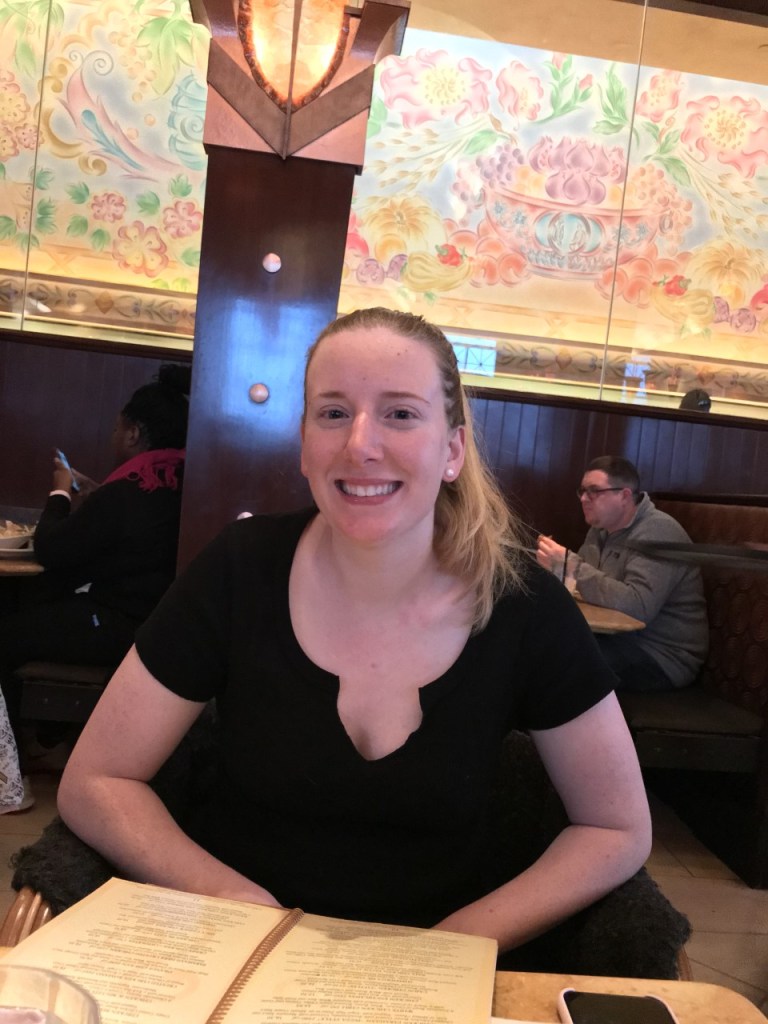
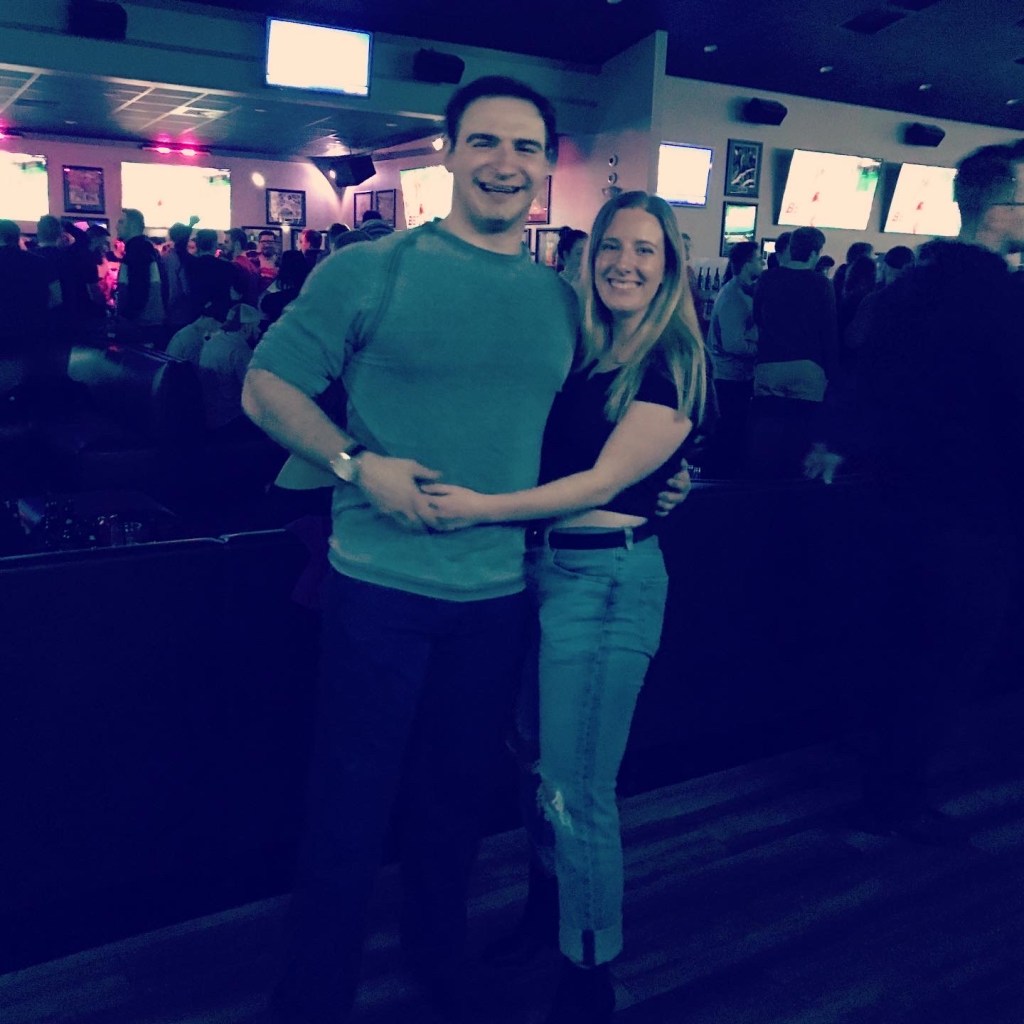
My beautiful girlfriend taking me out for lunch at the cheesecake factory on my birthday

Luke’s Wellness Blog Chapter 4

Chapter Four is all about relationships, how we define them, what we get from them, and their main consequences (being both good, and potentially bad). The first topic I would like to talk about is on the first page of the chapter. Sternberg’s Triangular Theory of Love is a theory saying that there are three pillars (characteristics of love) that we drift towards, almost in a Venn diagram type format, but more in a gradient sense. The three characteristics are Intimacy, Passion, and Commitment (Donatelle 75).The gradient is a good analogy because you can be in a relationship with more Intimacy/Passion, but less so commitment, or any combination of the three . However, Sternberg’s idea is that the most ideal form of love is called consummate love, and thats when all three pillars are shared equally, in the middle. This is only one form of love theory, and there are other more chemistry and brain wave based theories as well, but I like this one because it highlights that love isn’t just meant to be or not, you have to work for it.

The second topic I really enjoyed was the sub Chapter 4.3 talking about online dating. Today we have so many dating apps readily available to us, and I bet a large amount of us in this class have used them. Its become so popular, which I think is a good thing, but it also takes away from our intimacy sometimes, and also it can be dangerous as well. The chapter talks about how if you decide to go on a date with someone you met online, you have to be extra careful. This makes sense, because you never know who the person is until you actually meet them in person. It says to “Plan something brief, preferably during daylight hours. Meet in a public place, such as a coffee shop”, which I think is a great place unless you don’t like coffee (like me) (Donatelle 82). Remember, always put safety first and remember that just because you get along with someone online or through text, doesn’t mean you will in person.

The last topic I want to talk about is the Gender Differences part, 4.6. There is a great chart on the page that lists the general gender differences between men and women into four separate parts. Facial expressions, speech patterns, body language, and behavioral differences. Now it is important to note that these differences are an average. not a cold cut fact for every single person who identifies with that gender. For instance on average it says women are more likely to maintain better eye contact, but you might not fall into that average (Donatelle 85). I also like how it talks about modifying your communication by actively thinking about the receiver in this situation. If you are a woman and you know men tend to lean back when listening, make sure you understand that, or in most cases you can always just ask. The same goes for the reverse as well.

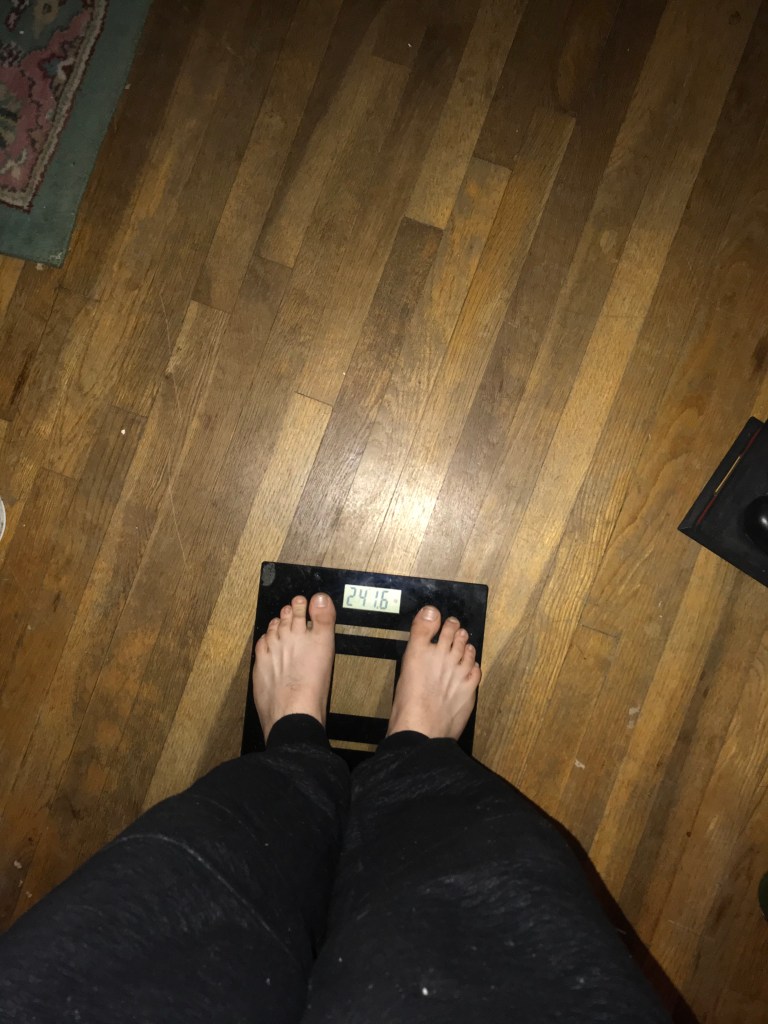
Lastly, my progress on my ankle has been going well, I have been consistently doing my drills which I have found take about 25 minutes every time. I do the drills three times a week, and I also have started running more. I have started a caloric deficit and am trying to cut down from 243lbs to 212 lbs or so now that Spring is almost here. There is almost no pain in my ankle joint now and I am excited because a lot of single leg exercises have really improved!

Stress!!!

By: Luke Frankel

Week Three is all about stress! The different types of stress, how we deal with them, and all sorts of facts about how different demographics of people have certain predispositions to stressors. “Stress is the mental and physical response and adaptation by our bodies to the real perceived changes and challenges in our lives” (Donatelle 50). I really like this quote because for so long I perceived stress as just a mental ailment that I would have to deal and live with because I thought it was normal to be stressed all the time. Luckily, throughout the years I have realized that if my mind isn’t right, neither is my body or my life. This chapter helped me realize the differences in certain types of stress and also what those types do to your body and mind. For example, I didn’t know what eustress was until I read this chapter, and now I know it is a positive stress that is not always a bad thing. For example, if you just had a child of course you are going to be stressed out, but that doesn’t mean you need to get rid of it. Not all stress is bad, and often it can actually make us push ourselves to become better and more resilient people.

One of the biggest take-aways I have from this chapter is to STOP USING MY PHONE BEFORE BED! Seriously. I always use it late and night and I wonder why I can’t sleep. Its always instagram or snapchat too, stuff that I can always look at in the morning and I regret doing, even while I’m doing it. My goal for this week is to not only keep working on my ankle mobility (which is coming along great by the way), but to also try and sleep at the exact same time every night, which has been a trouble point of mine for years! Studies suggest that if you go to bed at the same time every night, your circadian rhythm becomes for fluid and you’ll fall asleep faster. Anyways, I hope you all enjoyed my blog! Have a great week everyone!

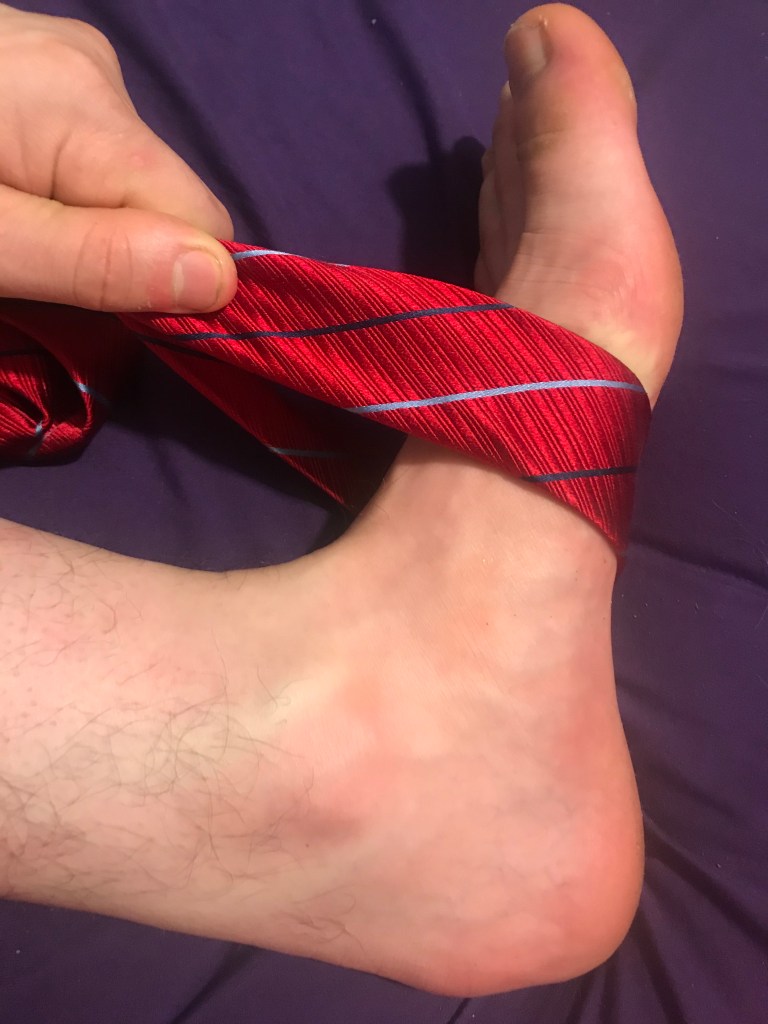
Using a tie or a band and pulling back on my ankle has increased my flexibility in my gastrocnemius muscle in my calf, and it helps me have greater range of motion in my ankle!

Chapter 2:

By: Luke Frankel

Chapter 2 is all about psychological health. According to MyHealth, ” Psychological health is the sum of how we think, feel, relate, and exist in our day-to-day lives. Our thoughts, perceptions, emotions, motivations, interpersonal relationships, and behaviors are the product of a combination of our experiences and the skills we have developed to meet life’s challenges” (Donatelle 26). This means it is a multi-faceted subject that is complex in so many ways. However, the results that you want are usually pretty clear. What I mean by this is, we all want to feel happy in our daily lives, but the road to getting there is complex and sometimes seems esoteric.

In this Chapter we learned a lot about Maslowe’s Hierarchy of Needs and how the human brain can only advance once those needs are met on each individual level. I think it is important to understand each level by itself, because we need to know that not everyone has the same problems as others. You cannot think about your self esteem when you are struggling to eat and drink enough water every day. By that same token, if you are unsafe when you are trying to sleep at night, you will not be able to worry about things like spirituality. It all relates, and I think that is the most important fact to take away from psychological health, everyone’s is different.

Lastly, we need to understand the risk factors that put us in danger for things like major depression, bipolar disorder, etc. How those risk factors affect us, and what we can do to make our risk less. An important factor of this is having friends or close relationships with family who will be able to see you from an objective point of view, therefore broadening your own scope of self. If they see you acting a certain way or forming habits, its important to have someone you can trust that knows what to look for in these situations. Therefore I believe it is imperative that all of us understand signs for all different types of psychological breaks or health issues.

Chapter 1

By: Luke Frankel

In Chapter 1 we read, “In 1968, René Dubos proposed an even broader definition of health. In his book So Human an Animal, Dubos defined health as “a quality of life, involving social, emotional, mental, spiritual, and biological fitness on the part of the individual, which results from adaptations to the environment” (Donatelle 5) I was enlightened in the fact that for most of my life I have been only taking care of one or two of the 6 dimensions of wellness. In this section we talked about physical, social, intellectual, emotional, spiritual and environmental health. Idealistically, you want to have a healthy balance in all of the six dimensions. My example would be that I love going to the gym six days a week, and I take care of my body in the nutritional aspect. But, that is only one part of the six dimensions of wellness and I really need to step up my game on the other five dimensions.

For each of the other 5 dimensions I will try and give an example of what I can do to better myself.

Social: I normally have a solid friend group who I have known for years and love them all dearly, however there is always room for improvement and sometimes I feel as if though I am letting them down when I do not feel like going out with them. I will try and make myself spend more time with my friends, doing things I do not necessarily enjoy, but nonetheless spending more time with them.

Intellectual: School is a great way for me to expand my horizons, and learn new subjects that will help me further my education. I plan on also reading at least one book every month that is not required by school.

Emotional: Emotionally I have always felt rather stable, and I usually think before I act based on an emotion, even in the strongest cases. However, it is important to understand that we need to make sure we are creating positive feedback loops in our brains in such a way that promotes success within ourselves and with our relationships. So i will try to push the boundaries and let others know how I am feeling or ask them how they feel.

Spiritual: I grew up in the Catholic faith and that is how I have always associated with spirituality. Even though I do not practice anymore, I still understand that the relationship with oneself and the world around you is an important facet of a healthy lifestyle. I plan on keeping up with my ten minutes of meditation a day and possibly increasing it into two 10 minute sessions.

Environmental: Environmentally I need to work on understanding how the world around me affects my health. I also need to work on understand what I can do to fix and make the world a better place to live in that is safe for all of us. I will try to educate myself on this topic more.

Introduce Yourself (Example Post)

This is an example post, originally published as part of Blogging University. Enroll in one of our ten programs, and start your blog right.

You’re going to publish a post today. Don’t worry about how your blog looks. Don’t worry if you haven’t given it a name yet, or you’re feeling overwhelmed. Just click the “New Post” button, and tell us why you’re here.

Why do this?

  • Because it gives new readers context. What are you about? Why should they read your blog?
  • Because it will help you focus you own ideas about your blog and what you’d like to do with it.

The post can be short or long, a personal intro to your life or a bloggy mission statement, a manifesto for the future or a simple outline of your the types of things you hope to publish.

To help you get started, here are a few questions:

  • Why are you blogging publicly, rather than keeping a personal journal?
  • What topics do you think you’ll write about?
  • Who would you love to connect with via your blog?
  • If you blog successfully throughout the next year, what would you hope to have accomplished?

You’re not locked into any of this; one of the wonderful things about blogs is how they constantly evolve as we learn, grow, and interact with one another — but it’s good to know where and why you started, and articulating your goals may just give you a few other post ideas.

Can’t think how to get started? Just write the first thing that pops into your head. Anne Lamott, author of a book on writing we love, says that you need to give yourself permission to write a “crappy first draft”. Anne makes a great point — just start writing, and worry about editing it later.

When you’re ready to publish, give your post three to five tags that describe your blog’s focus — writing, photography, fiction, parenting, food, cars, movies, sports, whatever. These tags will help others who care about your topics find you in the Reader. Make sure one of the tags is “zerotohero,” so other new bloggers can find you, too.

Design a site like this with WordPress.com
Get started